Procurement
A Procurement Checklist for Emergency Kit Components
Build a clear emergency kit purchasing brief with component specifications, sample checks, packaging requirements and receiving criteria.
In this guideDefine who will use the kit
Buying emergency kit components works best when the kit is treated as a complete package. A blanket, light, bottle and bag may each meet a specification yet fit poorly together, need incompatible accessories or create avoidable assembly work. A clear purchasing brief connects individual products with the way the kit will be packed, stored and issued.
Define who will use the kit
Start with the audience, setting and distribution plan. An employee evacuation pack, a vehicle kit and a shared workplace supply serve different needs. Record whether users will carry the kit, whether it will remain at a fixed location and who will inspect it during storage.
Use an appropriate preparedness checklist to establish requirements, then adapt it to the actual organization. The U.S. Department of Veterans Affairs’ emergency preparedness resources for caregivers show how kit planning can account for individual needs. A general planning reference does not certify a commercial kit or establish that one assortment meets every user’s needs.
Create one controlled component list
Give each component a line in the purchasing sheet. Record the quantity per kit and the total purchase quantity separately. This prevents a case pack from being mistaken for an individually issued item.
| Purchasing field | Detail to record |
|---|---|
| Component | Plain product name and selected model |
| Quantity | Units per kit and total units required |
| Specification | Dimensions, construction, interfaces or other relevant details |
| Included items | Batteries, cables, adapters, pouches and instructions |
| Packaging | Individual pack, inner pack and outer carton |
| Approval | Sample reference and accepted version |
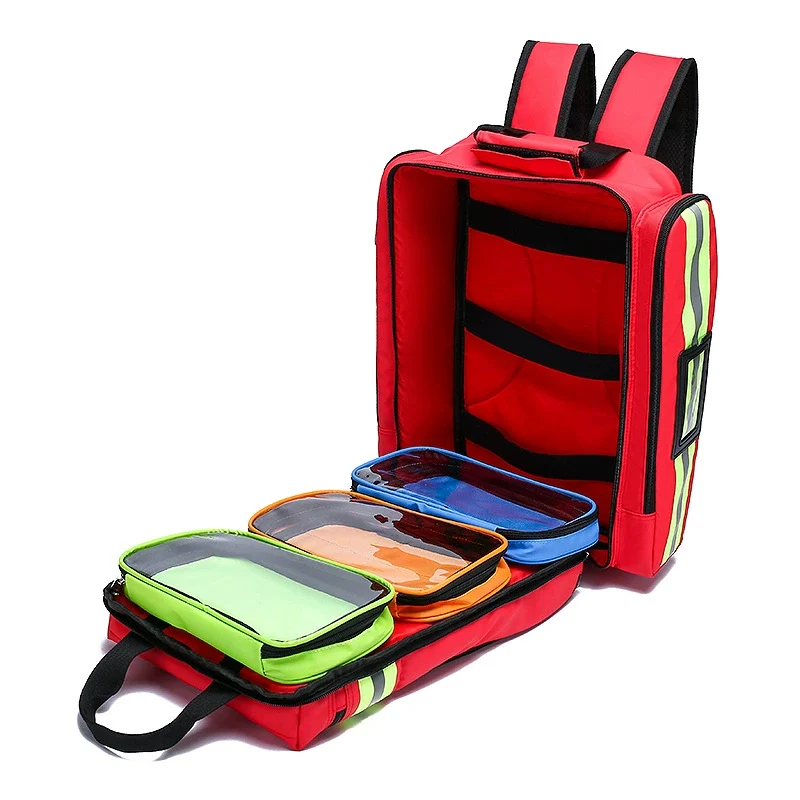
Keep optional accessories on separate lines. A backpack shown with equipment does not establish that the equipment is included. The same applies to a power unit pictured with a solar panel or a filter shown with several connection options.
Check compatibility during sample review
Build a representative sample kit using the proposed components and packaging. Measure the packed kit, check its weight and confirm that users can reach frequently needed items without emptying the bag.
Then review the connections between products. Does the chosen charging cable fit both the power source and the device? Does the bottle fit the bag’s pocket? Can a light switch be pressed accidentally during packing? Are instructions available without discarding them with the outer carton?
Photograph the approved layout and record any assembly sequence. A visual reference helps receiving and packing teams recognize substitutions or missing accessories. Specify whether substitutions require approval before shipment.
Plan for storage and replacement
Review care and storage instructions for each relevant component. Products may have different charging, inspection or replacement requirements. Bring those requirements into a maintenance schedule that the organization can realistically follow.
Check whether date-sensitive items are included, how they are marked and how they will be tracked. For batteries, filters or other replaceable parts, identify the compatible replacement rather than recording a generic description. Keep the kit’s component list available after distribution so a future replenishment order can refer to the same items.
Where a product requires application-specific documentation, request it for the selected model and destination. Do not treat a supplier’s broad certification statement as evidence for every individual component in the kit.
Standardize quotation requirements
Send each supplier the same component list and identify which alternatives are acceptable. Request carton quantities, dimensions, and weights, together with the proposed shipment contents. Compare these alongside the quotation’s stated commercial terms and validity.
An attractive unit price can lose its advantage if it excludes accessories, requires repacking or uses a different construction. Resolve those differences before approval. Keep the final quotation, specifications and sample record together so the order can be checked against an agreed reference.
Before releasing an order, confirm:
- Every selected model has an agreed specification.
- Quantities and packaging levels are unambiguous.
- Required accessories and instructions are included.
- The sample kit fits and can be packed consistently.
- Receiving checks identify the correct items and any agreed documents.
- Storage and replenishment responsibilities are assigned.
Explore our product catalog to select components across categories, including field essentials. Send us your component list through our bulk and wholesale purchasing route with target quantities and destination to request a quotation.